
Introduction
Few developments in modern history have reshaped medicine as profoundly as artificial intelligence. What once existed only in research papers and science fiction has become a living reality. Breathing part of hospitals, clinics, and medical laboratories around the world. Today, AI is reading X-rays, predicting disease outbreaks, and streamlining paperwork. Even helping scientists discover new drugs, often faster and more accurately than any human could alone.
But understanding where this technology came from, what it actually does, and where it is heading requires more than a glance at headlines. This article offers a thorough, honest look at artificial intelligence in healthcare, its types, its applications, its benefits, the challenges it faces, and the future it promises to deliver.
A Brief History: How AI Entered the Hospital
The story of AI in healthcare did not begin with smartphones or cloud computing. The roots stretch back decades, to the early days of “expert systems,” rule-based programs that used chains of if-then logic to mimic the reasoning of medical specialists. These systems appeared in the 1980s and were used to support clinical decisions, though their rigid structure made them brittle in the face of complex, real-world cases.
The real turning point came in 2011, when IBM launched a healthcare-specific version of its Watson platform, using natural language processing to interpret medical literature and patient data. It was one of the first high-profile demonstrations that a machine could navigate the complexity of clinical decision-making. Since then, the field has exploded. Tech giants including Google, Microsoft, Amazon, and Apple have all invested heavily in healthcare AI, bringing with them the computational firepower and data infrastructure needed to take this technology to scale.
The numbers tell their own story. According to industry analysts, the global AI in healthcare market was valued at around $11 billion in 2021. By 2030, it is projected to approach $187 billion a figure that reflects not just investor enthusiasm, but the very real, measurable value that AI is delivering on the ground.
Types of Artificial Intelligence Used in Healthcare
Not all AI is the same. Several distinct branches of the technology are being applied across the healthcare industry, each with its own strengths and use cases.
Machine Learning
Machine learning is the engine behind much of what AI does in medicine today. Rather than following a fixed set of rules, machine learning algorithms learn from data, identifying patterns, drawing correlations, and making predictions based on what they have seen before. In healthcare, this means analyzing thousands of patient records to predict who is at risk of a serious illness, examining medical images to spot early-stage tumors, or identifying which treatment protocol is most likely to succeed for a given patient profile.
A particularly powerful subset of machine learning is deep learning, which uses neural networks modeled loosely on the human brain. Deep learning has proven especially effective in interpreting complex visual data, such as MRI scans, CT images, and pathology slides. These systems can now match and in some cases exceed the diagnostic accuracy of trained specialists.
The most common practical application remains precision medicine: using patient-specific data to predict which treatments will be most effective, tailoring care to the individual rather than relying on population-level averages.
Natural Language Processing
A significant portion of medical knowledge lives not in tidy databases, but in the unstructured text of clinical notes, discharge summaries, referral letters, and research papers. Natural language processing (NLP) is the branch of AI that enables computers to read, interpret, and extract meaning from this kind of human language.
In healthcare settings, NLP is being used to review patient records and accurately identify diagnoses, surface relevant treatment options, flag potential drug interactions, and predict health risks based on a patient’s documented history. It also plays a central role in automating documentation, reducing the burden on clinicians who spend hours each week dictating notes and filling out forms. As healthcare moves toward value-based care models, where accuracy and completeness of documentation directly affects reimbursement, NLP has become an essential tool.
Rule-Based Expert Systems
The oldest form of AI in medicine, rule-based expert systems, are still in use today, particularly within electronic health record (EHR) platforms. These systems operate on a straightforward principle: a team of experts encodes their knowledge into a series of rules, and the system applies those rules whenever it encounters a relevant clinical scenario.
They work well for well-defined, stable domains, alerting a prescriber to a dangerous drug interaction, for instance, or flagging a patient whose lab results fall outside a safe range. Their weakness is rigidity. When the knowledge base grows too large, rules begin to conflict with one another. When medical practice evolves, updating thousands of individual rules is slow and labor-intensive. For these reasons, rule-based systems are increasingly being supplemented or replaced by more adaptive machine learning approaches.
Key Applications of AI in Healthcare
Diagnosis and Medical Imaging
One of the most mature and well-documented applications of AI in healthcare. That is in diagnostics, particularly in the reading of medical images. Radiology, pathology, and ophthalmology have all been transformed by deep learning systems capable of analyzing scans with remarkable precision.
Google’s DeepMind, for example, demonstrated that its AI could diagnose eye diseases. From retinal scans with accuracy comparable to leading human specialists. In oncology, AI tools are being deployed to detect cancers at earlier stages. Than conventional methods, when treatment outcomes are significantly better. In cardiology, researchers at Imperial College London have developed an AI-powered stethoscope capable of detecting heart failure. Valve disease and irregular heart rhythms in just 15 seconds, a breakthrough that could transform triage in emergency settings.
Beyond imaging, AI systems are helping physicians interpret the full spectrum of clinical data. Lab results, vital signs, genetic markers, and patient histories to arrive at faster, more accurate diagnoses.
Predictive Analytics and Preventive Care
One of the most exciting promises of healthcare AI is its ability to predict illness before it strikes. By analyzing patterns in a patient’s historical data, including previous diagnoses. These medications, lifestyle factors, and more, AI models can estimate the probability. That a patient will develop a serious condition in the months or years ahead.
Researchers in the United Kingdom are already using large health datasets. To build models capable of predicting the onset of diseases like Alzheimer’s and kidney disease years before symptoms emerge. In India, the state of Telangana is piloting AI-powered cancer screenings for oral, breast, and cervical cancers. Targeting populations where radiologist shortages have historically made early detection difficult or impossible.
This predictive capability shifts the entire orientation of healthcare, from reactive treatment to proactive prevention. The benefits for patients, for providers, and for healthcare systems are enormous.
Drug Discovery and Clinical Research
The traditional process of bringing a new drug to market takes a decade or more and costs billions of dollars. Much of that time is spent in the early discovery phase screening millions of potential compounds to find those worth investigating further. AI is beginning to compress this timeline dramatically.
Companies like DeepMind are using AI models to accelerate drug candidate identification, with some experts suggesting that what once took years may soon take only months. Beyond discovery, AI is also being used to design more efficient clinical trials, identify suitable patient populations, and analyze trial data in real time, all of which reduce cost and bring effective treatments to patients faster.
Administrative Efficiency and Clinical Documentation
The administrative burden in healthcare is enormous. Clinicians in many countries spend as much time on paperwork as they do with patients. AI is tackling this problem directly, through tools that automate appointment scheduling, claims processing, prior authorization requests, and medical coding.
Perhaps most significantly, AI is transforming clinical documentation. Tools like Heidi Health automate the transcription and structuring of medical notes, saving physicians significant time each day. Microsoft’s Dragon Copilot drafts referral letters, after-visit summaries, and clinical notes from dictation, allowing doctors to maintain thorough records without sacrificing time at the bedside. These tools do not just save time they reduce burnout, improve documentation quality, and ultimately allow clinicians to focus on what they trained to do: care for patients.
Mental Health and Digital Therapeutics
The mental health field is emerging as one of the most active areas of AI development in healthcare. A new generation of AI-enabled tools ranging from conversational chatbots to virtual therapy platforms is expanding access to mental health support, particularly for populations who face barriers to traditional in-person care.
Recognizing the pace of this growth, the U.S. Food and Drug Administration is preparing to formally evaluate these digital mental health devices, weighing both their potential benefits and the risks they carry. Ensuring that these tools are safe, effective, and equitable will be a defining challenge of the coming years.
The Benefits of AI in Healthcare: A Summary
The case for artificial intelligence in healthcare rests on a foundation of real, measurable benefits.
- Improved diagnostic accuracy: is perhaps the most headline-worthy advantage. AI systems can detect patterns in imaging and clinical data that human eyes might miss, catching diseases earlier and reducing the risk of misdiagnosis.
- Faster, more personalized treatment is another major gain. By analyzing a patient’s unique genetic profile, medical history, and response to prior treatments, AI can help clinicians recommend therapies that are precisely matched to the individual the promise of precision medicine, finally within reach.
- Reduced administrative burden: frees clinicians from time-consuming paperwork, giving them more time with patients and reducing the burnout that is driving many experienced professionals out of the field.
- Better population health management: allows health systems to identify high-risk patients before crises occur, intervening earlier and reducing costly hospitalizations.
- Accelerated research and drug development: has the potential to bring life-saving therapies to market faster than any previous generation of tools.
Challenges and Ethical Considerations
For all its promise, AI in healthcare does not come without significant challenges. Understanding these honestly is essential for anyone working in or depending on this field.
Trust and Transparency
Patient trust in AI-driven healthcare tools lags behind clinical enthusiasm. Many patients are uncomfortable with the idea of an algorithm influencing their diagnosis or treatment, concerns that are not unreasonable. Building confidence requires transparency about how these systems work, clear communication from clinicians about when and why AI is being used, and robust evidence that the tools perform as advertised.
A 2025 survey by the American Medical Association found that 66% of physicians were already using some form of health AI, up from 38% just two years earlier. Yet many of those same physicians expressed concerns about errors, bias, and the risk of over-reliance on automated recommendations.
Bias and Fairness
AI systems learn from historical data, and historical data carries historical biases. If a model is trained primarily on data from one demographic group, it may perform poorly for others potentially exacerbating existing health inequities rather than reducing them. Ensuring that AI tools are tested and validated across diverse populations is not optional; it is a fundamental requirement of responsible development.
Accountability and Liability
When an AI-assisted recommendation leads to a harmful outcome, the question of accountability becomes pressing and complex. Is the clinician responsible? The hospital? The software developer? Existing legal frameworks were not designed with autonomous or semi-autonomous AI systems in mind, and new models of liability are urgently needed.
Integration and Adoption
Even when AI tools perform exceptionally in trials, widespread adoption in real-world clinical environments remains difficult. Healthcare organizations face significant challenges integrating new systems with existing workflows and EHR platforms, training staff to use them effectively, and demonstrating a return on investment that justifies the cost. These practical barriers have slowed the rollout of many promising tools.
Regulatory Oversight
Regulatory bodies around the world are working to keep pace with the speed of AI development. In the United States, the FDA is actively developing frameworks for evaluating AI-based medical devices, including those in the mental health space. Striking the right balance, encouraging innovation while protecting patients from poorly validated or dangerous tools, will be one of the most important policy challenges of the next decade.
Recent Advances Worth Watching
The pace of development in healthcare AI is extraordinary. Several recent advances illustrate just how rapidly this field is moving.
In radiation oncology, tools like Osiris AI, developed in partnership with Microsoft, are being deployed to streamline treatment planning, reducing the time clinicians spend on complex calculations and allowing them to treat more patients. In primary care and hospital settings, AI note-taking assistants are now being used by thousands of physicians daily, saving hours of documentation time each week.
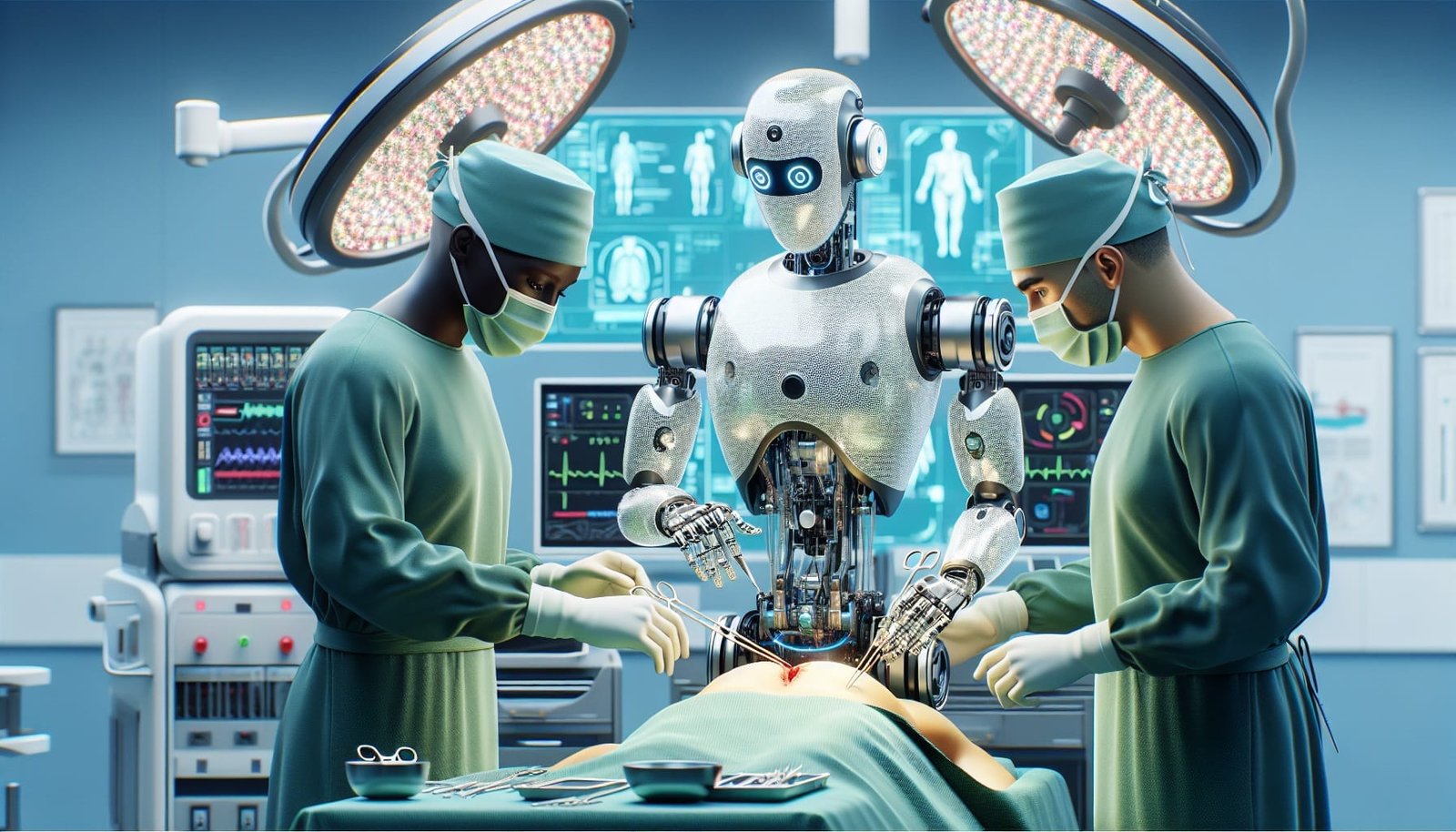
At the research frontier, reinforcement learning, a form of AI that learns by optimizing long-term outcomes rather than single predictions, is being applied to the challenge of recommending treatment strategies over time, particularly for complex chronic conditions. Robotic and multisensory AI systems are beginning to appear in diagnostic pathology and surgical settings, pointing toward a future in which AI is not just a software tool but an active participant in physical care delivery.
The Road Ahead: What the Future of AI in Healthcare Looks Like
The trajectory of AI in healthcare points clearly toward deeper integration, broader access, and greater autonomy. Over the next decade, we can expect AI-powered imaging systems to become standard in radiology departments worldwide; predictive models to be embedded in every EHR platform; and AI assistants to handle a growing share of clinical documentation, coding, and administrative work.
More importantly, there is a real opportunity to extend these benefits beyond high-income countries and large health systems. AI tools that can function with limited infrastructure on mobile devices, with minimal specialist oversight, could dramatically improve healthcare access in low-resource settings. This is not a distant aspiration; pilots in India, sub-Saharan Africa, and rural communities in wealthier nations are already demonstrating what is possible.
The long-term promise of precision medicine, where every patient receives a treatment plan tailored specifically to their biology, history, and circumstances, depends on AI being able to synthesize data at a scale no human team could manage. That future is not yet fully realized, but it is closer than it has ever been.
Conclusion
Artificial intelligence in healthcare is not a prospect; it is a present reality, already reshaping how patients are diagnosed, how clinicians practice, how administrators manage their systems, and how scientists discover new treatments. Its benefits are real and well-documented. Its challenges around trust, bias, integration, accountability, and regulation are equally real and demand serious attention.
The most important insight may be this: AI is most powerful not when it replaces human judgment, but when it augments it. The clinician who understands both the capabilities and the limitations of these tools, and who uses them thoughtfully, will deliver better care than either a human or a machine working alone.
Those who embrace that partnership with curiosity, rigor, and a commitment to equitable outcomes will define what healthcare looks like for the next generation.
This article is intended for informational purposes and reflects the state of AI in healthcare as of early 2026. Healthcare professionals should consult current clinical guidelines and peer-reviewed literature when making medical decisions.