
AI baby memes are everywhere. They flood social media feeds daily. Cute, chubby, and oddly wise-looking infants stare back at you. But they are not real babies. They are AI-generated images.
These images have become a major internet trend. They spark laughs, debates, and sometimes controversy. Understanding this phenomenon matters in 2024 and beyond.
What Is the AI Baby Meme?
An AI baby meme uses artificial intelligence to create infant images. These babies look hyper-realistic. Sometimes they look fantasy-like. They are generated using tools like Midjourney, DALL-E, and Stable Diffusion.
The meme format pairs these images with funny captions. The captions often make babies seem wise or sarcastic. The humor comes from the contrast between infant appearance and adult wisdom.
How Did It Start?
The trend began around 2022 and 2023. AI image tools became widely accessible. Anyone could generate stunning baby images in seconds. Social media users started sharing them instantly.
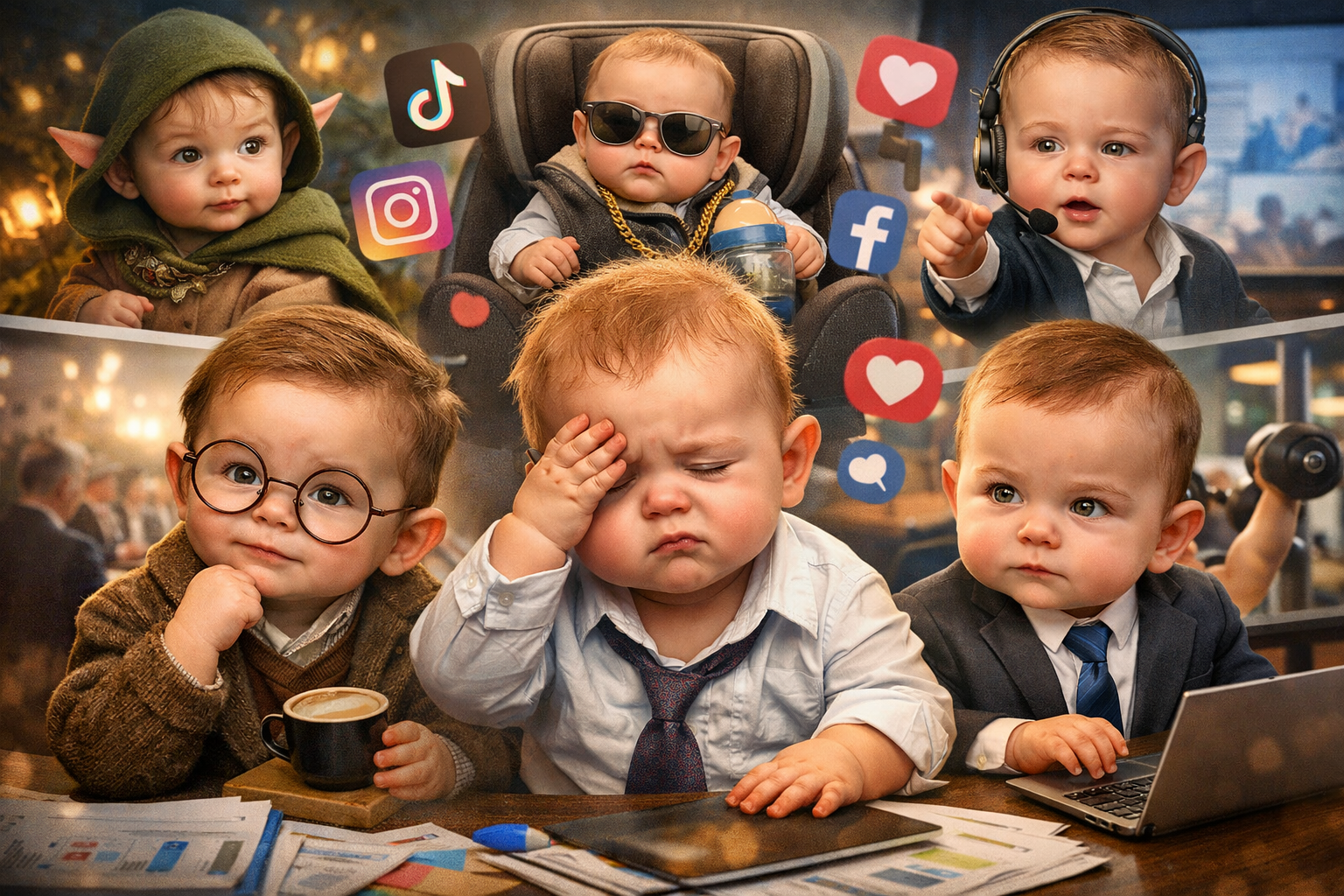
Early memes featured babies in adult situations. A baby in a business meeting. The baby is giving motivational speeches. A baby “judging” life choices. These formats went viral fast.
Facebook, TikTok, and Instagram became hotspots. Grandparents shared them. Teenagers shared them. Even corporations used them in marketing.
Why Are AI Baby Memes So Popular?
Several reasons explain their massive appeal:
• Babies are universally cute. People are wired to respond to infant faces.
• The humor is safe. Baby content rarely offends compared to other meme types.
• AI quality is impressive. The images look surprisingly real.
• They are relatable. Many captions reflect everyday struggles.
• They spread across age groups. Young and old users enjoy them equally.
Popular Themes in AI Baby Memes
The “Monday Morning Baby” became iconic. It shows a tired, grumpy-looking infant. The caption reads something like: “Me waking up for work again.”
“Budget Baby” is another hit. A baby dressed in a suit stares at spreadsheets. The humor targets adult financial stress.
“Philosopher Baby” shows an infant with a thoughtful look. It mimics deep, existential questions. Users love adding dramatic philosophical text.
“Baby CEO” features a tiny infant in a boardroom setting. It mocks corporate culture. Many office workers find it deeply relatable.
The Technology Behind the Meme
Generative AI powers these images. Models like DALL-E 3 and Midjourney v6 produce stunning results. Users type a simple text prompt. The AI creates a detailed image in seconds.
The process is simple. No art skills are needed. No photography equipment is required. Just words produce an image ready for meme creation.
Mobile apps made it even easier. Apps like Wonder AI and Canva AI let users generate baby images on the go. Meme-making became truly democratized.
Concerns and Controversies
Not everyone laughs at AI baby memes. Some raise serious concerns. Deepfake technology worries child safety advocates. AI baby images can be misused.
Privacy issues matter too. Some users generate images resembling real children. This raises ethical questions about consent and digital identity.
Misinformation is another risk. Some AI baby images have been shared as real photos. This misleads viewers and spreads false narratives.
Platforms are responding slowly. Facebook and Instagram are working on AI content labeling. Transparency in AI-generated media remains a growing need.
AI Baby Memes in Marketing
Brands noticed the trend quickly. Baby-related products began using AI meme formats. Diaper brands, toy companies, and food brands jumped in.
The strategy works well. Cute AI baby content gets high engagement. Shares and comments increase significantly. Brand awareness grows organically.
Small businesses also adopted the trend. A bakery might post an AI baby reviewing their cakes. A gym might post an AI baby doing workout captions. It feels playful and human.
Cultural Impact
AI baby memes reflect something deeper. They show how AI has entered everyday culture. People no longer see AI as distant or technical. It is now fun and accessible.
The meme also reflects digital creativity. Anyone can be a content creator. A phone and a prompt are all you need. This empowers millions of people worldwide.
They also highlight generational humor. Gen Z and Millennials use AI memes to process stress. Humor becomes a coping tool wrapped in adorable baby faces.
What Is Next for AI Baby Memes?
The trend shows no sign of stopping. AI tools keep improving rapidly. Images will become more realistic every month. New creative possibilities keep emerging.
Video AI is the next frontier. Short AI baby video clips are already appearing. They are funny, shareable, and increasingly convincing.
Regulation may shape the future. Governments are discussing AI content laws. Labeling requirements could change how these memes are shared and viewed online.
Conclusion
AI baby memes are more than just cute pictures. They represent a shift in how people use artificial intelligence. AI Baby memes shows creativity, humor, and the power of digital tools.
They also come with responsibilities. Users must think critically about what they create and share. Not every cute image is harmless or ethical.
Still, the phenomenon delights billions. It proves that AI can be joyful, funny, and deeply human. The AI baby meme is here to stay.