
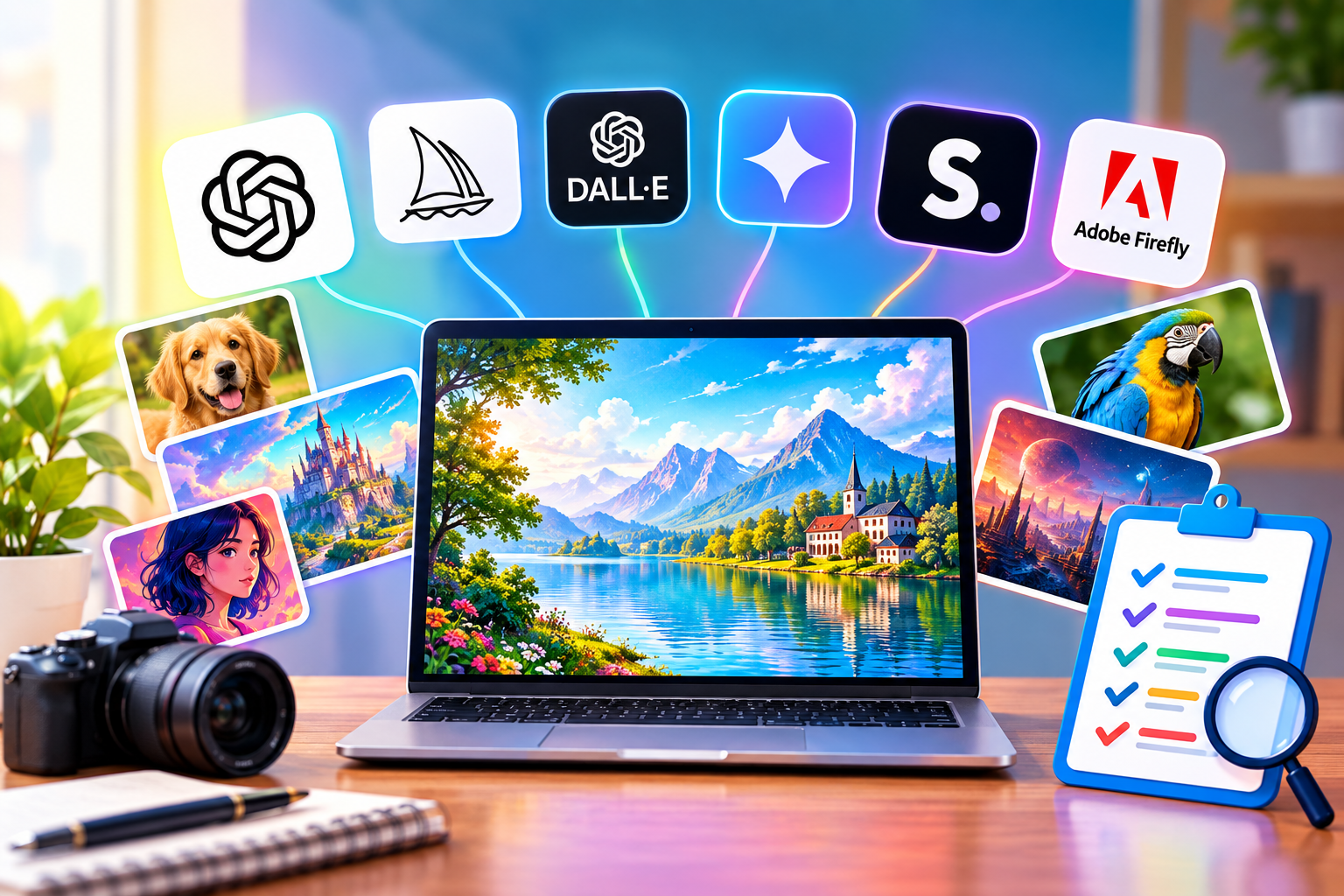
By early 2026, AI-generated images pass casual human evaluation as real photos more than 70% of the time. Four years ago, that same test would have failed embarrassingly. The gap between “obviously AI” and “genuinely photorealistic” has closed faster than almost anyone predicted, and it’s opened up a real, practical question for anyone who needs visuals: which tool actually fits the job you’re trying to do?
Why There’s No Single “Best” Tool Anymore
Two years ago, picking an AI image generator was simpler: Midjourney for art, DALL-E for ease, Stable Diffusion for control. That framework still mostly holds, but the field has split further since then. Specialized models now lead in narrower categories- photorealism, typography, product photography- that a single general-purpose tool used to try to cover all at once.
Many professional studios have adapted by using multiple tools together rather than picking one winner: one model for hero campaign art, another for product shots, another for fast iteration with a client on a call. Understanding each tool’s actual strength matters more than finding a single champion.
The Leading AI Image Generators in 2026
Midjourney
Midjourney remains the aesthetic leader for most users, producing the most immediately polished, artistic output with the least prompting effort. It’s the tool most marketers and designers reach for first when visual quality matters more than pixel-perfect prompt accuracy. Its weak spot has stayed consistent for years: rendering readable text inside an image, where it still lags well behind specialized competitors.
DALL-E (via ChatGPT)
DALL-E’s biggest advantage isn’t raw image quality; it’s accessibility and conversational editing. Built directly into ChatGPT, it’s the easiest entry point for anyone who doesn’t want to learn a separate tool or interface. It also handles detailed, specific prompt instructions and in-image text noticeably better than Midjourney, making it a strong pick when accuracy matters more than artistic flair.
Stable Diffusion
Stable Diffusion remains the open-source, self-hostable option, and it’s still unmatched on pure customization. Running it locally means no per-image cost and total commercial freedom, but it demands real technical setup, fine-tuning models, and managing your own hardware or cloud instance, which casual users typically don’t want to deal with.
Flux (Black Forest Labs)
Flux has emerged as the open-weight alternative that matches Midjourney’s photorealism at a fraction of the cost, priced per image rather than a flat monthly subscription. It’s become a favorite among developers and agencies that need API access and high-volume generation without Midjourney-level pricing.
Imagen (Google)
Imagen hit top-tier photorealism with its most recent release, and it’s become the go-to choice for anyone prioritizing photographic realism and speed at scale. For product photography and large batches of realistic variations, it’s frequently cited as the strongest current option.
Ideogram
Ideogram has carved out a clear, specific lead: text and typography inside images. Where Midjourney manages readable text only 30% to 40% of the time, Ideogram reportedly hits 90% to 95% accuracy, making it the obvious choice for logo work, posters, and any image where the words actually need to be legible.
Adobe Firefly
Firefly’s differentiator isn’t raw quality; it’s commercial safety. Trained specifically on licensed Adobe Stock content, it comes with commercial indemnification that enterprise teams and brand-safety-conscious organizations value heavily, even when a competitor might produce a marginally more striking image.
AI Image Generators Compared
| Tool | Best For | Approx. Pricing | Text in Images | Commercial Safety |
| Midjourney | Artistic quality, hero campaign imagery | $10–$60/month | Weak (~30–40%) | Standard commercial terms |
| DALL-E | Ease of use, prompt accuracy, ChatGPT integration | Included with ChatGPT Plus | Moderate–strong | Standard commercial terms |
| Stable Diffusion | Full control, self-hosting, zero per-image cost | Free (self-hosted) | Model-dependent | Depends on model/deployment |
| Flux | Photorealism at scale, API access | ~$0.01–$0.10/image | Improving | Commercial-friendly licensing |
| Imagen | Photorealism, product photography, speed | ~$0.04–$0.08/image | Good | Commercial-friendly licensing |
| Ideogram | Typography, logos, text-heavy design | $7–$50/month | Excellent (~90–95%) | Standard commercial terms |
| Adobe Firefly | Brand-safe enterprise use | Bundled with Creative Cloud | Good | Fully indemnified, licensed training data |
Choosing the Right Tool for Your Use Case
- For artistic illustration and hero campaign imagery, Midjourney’s distinctive, polished aesthetic remains the fastest path to something genuinely striking.
- For photorealistic faces, scenes, and product shots, Imagen and Flux currently lead, with Flux offering a meaningfully lower cost at high volume.
- For typography-heavy work, logos, posters, anything where legible text matters, Ideogram is the clear specialist.
- For quick iteration and easy onboarding, DALL-E inside ChatGPT remains the simplest starting point, particularly for non-designers.
- For brand-safe enterprise use, Adobe Firefly’s licensed training data and commercial indemnification outweigh a small edge in raw output quality for most large organizations.
- For full technical control and zero per-image cost, Stable Diffusion is still the only real option, provided you’re comfortable with the setup involved.
If you’d rather skip subscription pricing entirely, our closer look at PicLumen AI covers a free, multi-model platform that gives casual users access to a range of styles without committing to a paid plan first.
AI Image Generation by the Numbers
| Metric | Figure |
| AI images passing as real photos in casual evaluation | 70%+ |
| Ideogram’s text-in-image accuracy | ~90–95% |
| Midjourney’s text-in-image accuracy | ~30–40% |
| Typical Midjourney subscription range | $10–$60/month |
| Typical Flux per-image cost | $0.01–$0.10 |
| Common professional workflow | Multiple tools used together by use case |
Beyond Standalone Generators: Collaborative AI Creative Platforms
Standalone image generators are only part of the picture in 2026. A growing number of platforms now combine multiple AI models with real-time team collaboration on a single shared canvas, letting creative teams move from concept to finished campaign without switching between separate apps for generation, editing, and feedback. Our breakdown of Freepik Spaces covers exactly this shift, and it’s worth understanding for any team producing visual content at scale rather than one image at a time.
Can You Use AI-Generated Images Commercially?
It depends entirely on the tool and plan. Midjourney’s Pro and higher tiers generally allow commercial use. DALL-E images are commercially usable under OpenAI’s terms. Adobe Firefly was specifically built and trained for commercial safety, with indemnification included. Stable Diffusion’s commercial usage rights depend heavily on which specific model and deployment method you’re using, since it’s an open ecosystem rather than a single company’s product.
Before using any AI-generated image commercially, checking the specific tool’s current terms is worth the five minutes it takes, since licensing terms across this category have shifted meaningfully over the past couple of years and continue to evolve.
Final Thoughts
The AI image generation field in 2026 has matured past the “one tool to rule them all” phase into a genuinely specialized ecosystem. Midjourney still owns aesthetic polish, DALL-E still owns ease of use, Ideogram still owns typography, and Flux and Imagen are duking it out for photorealism at scale.
The smartest approach isn’t picking a single favorite and sticking with it forever. It’s understanding what each tool actually does best, and matching the right one to whatever you’re actually trying to create.
