

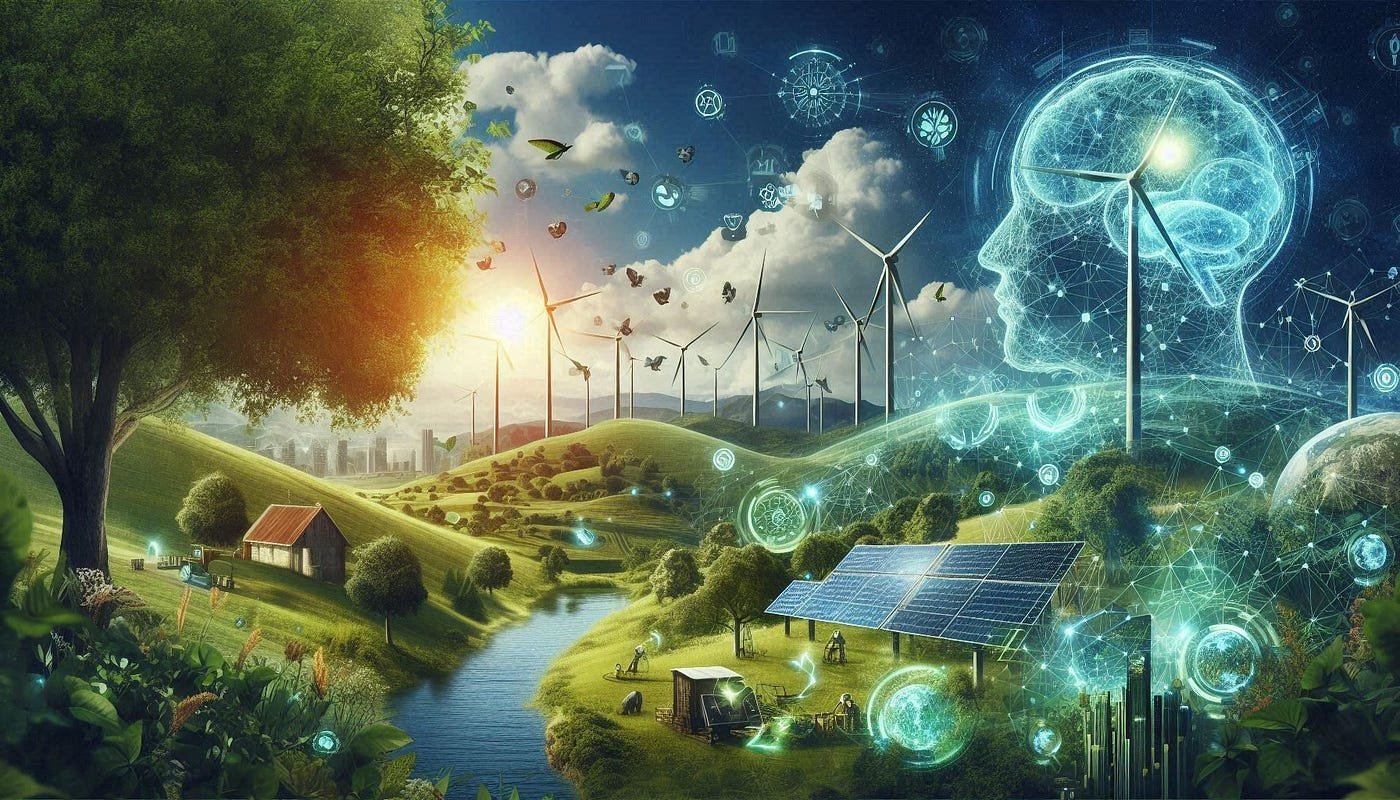
Introduction
The planet is changing faster than at any point in recorded history. Glaciers are retreating, wildfires are spreading across continents, and biodiversity is collapsing at a rate scientists describe as a sixth mass extinction. Traditional conservation efforts, policy reforms, and environmental monitoring systems, while necessary, have struggled to match the speed and complexity of the crisis.
Enter artificial intelligence. What was once a technology associated with stock trading algorithms and chatbots is now being deployed in rainforests, ocean monitoring stations, power grids, and climate laboratories. The role of AI in the environment is no longer theoretical. It is operational, measurable, and increasingly indispensable.
This article explores how machine learning, computer vision, predictive analytics, and other AI-driven technologies are being harnessed to protect, monitor, and restore the natural world.
Key Takeaways
- AI is transforming environmental monitoring, climate modeling, and energy management
- Machine learning helps detect deforestation, track wildlife, and predict natural disasters
- AI-powered smart grids and precision agriculture are drastically reducing resource waste
- Robotics and automation are enabling new approaches to ocean cleanup and reforestation
- Ethical deployment and energy consumption of AI systems remain critical concerns
Why AI Is Essential for Environmental Challenges
Environmental problems are fundamentally data problems. Climate systems generate petabytes of satellite imagery, atmospheric readings, ocean temperature logs, and biodiversity records every single day. Human analysts cannot process this volume at the speed the crisis demands.
Machine learning models thrive in exactly this environment. They can analyze satellite images to detect illegal logging in real time, model the interaction of thousands of atmospheric variables to forecast regional climate impacts, and identify patterns in ecological data that would take human researchers decades to uncover.
The convergence of AI with IoT sensor networks, drone technology, and satellite systems has created an entirely new infrastructure for environmental intelligence, one that operates continuously, at a global scale, and at a fraction of the cost of traditional methods.
Core Applications of AI in the Environment
1. Climate Modeling and Weather Forecasting
Climate science has always been computationally intensive. Simulating the behavior of the global atmosphere, oceans, and land surface requires solving billions of differential equations simultaneously. Traditional climate models, while powerful, are slow and resource-intensive.
AI is accelerating this process dramatically. Google DeepMind’s GraphCast model, for example, can produce 10-day global weather forecasts in under a minute, a process that previously required hours on the world’s most powerful supercomputers. Critically, it does so with comparable or superior accuracy for extreme weather events.
This speed has direct consequences for disaster preparedness. Earlier, more accurate warnings for hurricanes, floods, and heatwaves translate directly into lives saved and infrastructure protected.
2. Deforestation and Land Use Monitoring
Forests cover approximately 31% of the Earth’s land area and absorb roughly 2.6 billion tonnes of carbon dioxide annually. Their destruction is both an environmental catastrophe and a major driver of climate change.
AI-powered satellite analysis systems can now detect deforestation events within hours of their occurrence, anywhere on the planet. Organizations like Global Forest Watch use machine learning algorithms to process millions of satellite images, flagging clearings, fires, and illegal logging activity in near real time.
By the time a government inspector might have reached a remote forest location, an AI system has already identified the encroachment, geolocated it, and triggered an alert to local rangers.
3. Wildlife Conservation and Biodiversity Monitoring
Tracking animal populations across vast, inaccessible territories has always required enormous human resources. AI is making it scalable.
Computer vision models trained on camera trap images can identify individual animals by unique markings, track population numbers, and detect signs of poaching activity. The Wildlife Insights platform, powered by AI, has processed over 30 million camera trap images from 50 countries, dramatically accelerating the pace of biodiversity research.
Acoustic AI systems listen continuously to forest soundscapes, identifying the presence of endangered species, chainsaws, and gunshots, enabling conservationists to respond to threats in real time rather than after the fact.
4. Smart Energy Grids and Renewable Optimization
The transition to renewable energy faces a fundamental challenge: solar and wind power are intermittent. The sun does not always shine, and the wind does not always blow. Managing a grid that balances variable supply with fluctuating demand is an extraordinarily complex optimization problem.
AI tools are solving it. Machine learning models can predict solar generation 48 hours in advance based on weather forecasts, atmospheric data, and panel performance history. Similar models optimize wind turbine positioning and output in real time. DeepMind’s work with Google’s data centers used AI to reduce cooling energy consumption by 40%, a result directly applicable to grid-scale energy systems.
Smart grids powered by AI don’t just balance supply and demand more efficiently; they enable deeper integration of renewables, accelerating the displacement of fossil fuels.
5. Precision Agriculture and Food Systems
Agriculture accounts for approximately 18-20% of global greenhouse gas emissions and is the single largest consumer of freshwater. Digital transformation through AI offers a path to drastically more efficient food production.
Precision agriculture systems use AI to analyze soil sensors, weather data, crop imagery, and historical yield records to optimize planting schedules, irrigation, and fertilizer application at the individual plant level. The result: dramatically reduced water usage, lower fertilizer runoff, decreased pesticide application, and higher yields per acre.
Companies like John Deere and Trimble have deployed AI systems that can identify weeds in a field and target herbicide application with millimeter precision, reducing chemical use by up to 90% compared to blanket spraying.
6. Ocean Health and Marine Conservation
The oceans cover 71% of the Earth’s surface and generate 50% of the planet’s oxygen, yet they remain the least monitored environment on Earth. AI is beginning to change that.
Autonomous underwater vehicles equipped with AI vision systems can survey coral reefs, map seafloor ecosystems, and monitor the health of marine populations continuously. The Allen Coral Atlas uses satellite imagery and machine learning to map the world’s shallow coral reefs in unprecedented detail, tracking bleaching events and recovery in near real time.
IoT -enabled ocean sensor networks, analyzed by AI platforms, provide early warning of harmful algal blooms, oxygen dead zones, and temperature anomalies that threaten fisheries and coastal communities.
7. Waste Management and Circular Economy
Waste management is a global crisis. Only 9% of all plastic ever produced has been recycled. AI-powered automation is transforming this landscape.
Computer vision systems in recycling facilities can identify and sort materials at speeds and accuracy rates far exceeding human sorters, dramatically improving the quality and volume of recycled material. Startups like AMP Robotics deploy AI-powered robotic sorters that can process over 80 items per minute across dozens of material categories.
AI is also being used to optimize waste collection routes, reducing fuel consumption and emissions from municipal waste vehicles, a small but meaningful contribution across thousands of cities.
8. Natural Disaster Prediction and Response
Climate change is increasing the frequency and intensity of natural disasters. AI is becoming a critical tool for both prediction and response.
Machine learning models trained on seismic data, satellite imagery, and historical records can now provide earlier and more accurate warnings for wildfires, floods, landslides, and even earthquakes. AI-powered flood modeling tools are being used by governments to identify at-risk communities and design more resilient infrastructure.
During disaster response, AI systems can rapidly analyze satellite imagery to assess damage, prioritize aid delivery, and coordinate logistics capabilities that proved critical in responses to recent major hurricanes and earthquake events.
AI in Environment vs. Traditional Environmental Monitoring
| Capability | AI-Powered Systems | Traditional Methods |
| Coverage | Global, continuous | Localized, periodic |
| Speed | Real-time or near real-time | Hours to weeks |
| Data Volume | Petabytes processed daily | Limited by human capacity |
| Cost per Insight | Declining rapidly | High and relatively fixed |
| Early Warning | Hours to days in advance | Limited, often reactive |
| Species Identification | Millions of images automated | Manual, slow, expert-dependent |
The Ethical Challenges of AI in Environmental Contexts
Energy Consumption of AI Systems
There is a troubling irony at the heart of AI’s environmental promise: training large AI models requires enormous amounts of energy. A single large language model training run can emit as much carbon dioxide as five cars over their entire lifetimes.
As AI is deployed at scale for environmental monitoring and climate modeling, the energy footprint of AI infrastructure itself must be addressed, ideally by powering data centers entirely with renewable energy and designing more efficient model architectures.
Data Access and Environmental Justice
The most detailed environmental monitoring systems are currently concentrated in wealthy nations with advanced satellite and sensor infrastructure. Regions most vulnerable to climate change — sub-Saharan Africa, South and Southeast Asia, small island states — often lack the data infrastructure to benefit fully from AI-powered environmental tools.
Ensuring that AI-driven environmental protection reaches the communities most at risk is a critical challenge for international development and technology policy.
Algorithmic Bias in Environmental Decisions
AI systems used to direct conservation investment, disaster aid, or environmental regulation can encode the biases of their training data. If historical data underrepresents certain ecosystems or communities, AI systems may systematically underserve them.
Real-World Impact: Who Benefits?
The benefits of AI-powered environmental solutions extend across communities and scales:
- Coastal communities gain earlier warning of storms and floods, reducing loss of life and property
- Smallholder farmers have access to precision agriculture tools that reduce costs and improve yields
- Conservation organizations stretch limited budgets further through automated monitoring
- Urban planners use AI to design more energy-efficient, climate-resilient cities
- Governments access real-time environmental data to enforce regulations and allocate resources
The Future of AI in Environmental Protection
AI-Powered Carbon Markets
Accurate measurement and verification of carbon sequestration is essential for functional carbon markets. AI systems using satellite and sensor data are making it possible to verify carbon credits with unprecedented accuracy, reducing fraud and improving the integrity of climate finance.
Biodiversity Digital Twins
Researchers are developing AI-driven “digital twins” of entire ecosystems, computational models that simulate the behavior of complex ecological systems, enabling scientists to test conservation interventions before deploying them in the real world.
Climate-Adaptive Infrastructure
As climate impacts intensify, AI will play a growing role in designing and managing infrastructure that adapts in real time to changing conditions, from smart flood barriers to self-adjusting building systems that minimize energy use under extreme weather conditions.
AI and Environmental Policy
Governments and international bodies are beginning to use AI-powered data analysis to inform environmental policy, measure progress toward climate commitments, and detect violations of environmental regulations at scales previously impossible.
The future of AI in environmental governance may include systems that provide real-time accountability for national emissions commitments, making it significantly harder for governments to misreport their progress.
Final Thoughts
The environmental crisis is the defining challenge of the twenty-first century. It is also a data problem of extraordinary complexity, one that demands tools capable of operating at a planetary scale, processing information in real time, and identifying patterns invisible to human perception.
Artificial intelligence is not a silver bullet. It will not substitute for the policy changes, economic reforms, and behavioral shifts that meaningful climate action requires. But deployed thoughtfully, with attention to equity, transparency, and its own environmental footprint, AI represents one of the most powerful tools humanity has ever developed for understanding and protecting the natural world.
The planet’s future will not be decided by technology alone. But technology, specifically, the right application of artificial intelligence, may be what gives us enough time to decide it wisely.
FAQs
1. How is AI used in climate change?
AI is used to improve climate models, forecast extreme weather events, monitor deforestation and emissions, optimize renewable energy systems, and analyze the effectiveness of climate policies. It processes vast environmental datasets faster and more accurately than traditional methods.
2. Can AI help reduce carbon emissions?
Yes, through multiple pathways: optimizing energy grids to maximize renewable usage, reducing waste in manufacturing and agriculture, improving logistics efficiency, and enabling smarter building energy management. AI-driven systems can identify emission reduction opportunities invisible to human analysts.
3. What is precision agriculture, and how does AI help?
Precision agriculture uses data from sensors, satellites, and weather systems to optimize farming decisions at the individual plant level. AI analyzes this data to recommend the precise amount of water, fertilizer, and pesticide needed, dramatically reducing waste and environmental impact.
4. Is AI itself bad for the environment?
AI systems, particularly large models, require significant energy to train and operate. This is a genuine concern. However, the net environmental benefit of AI applications in energy optimization, emissions monitoring, and resource efficiency is widely considered to outweigh this cost, particularly as AI infrastructure shifts to renewable energy.
5. What role does IoT play in AI environmental monitoring?
IoT sensor networks provide the real-time data that AI systems need to monitor environmental conditions continuously. Together, IoT and AI create a comprehensive sensing and analysis infrastructure for everything from air quality monitoring to ocean temperature tracking.
