

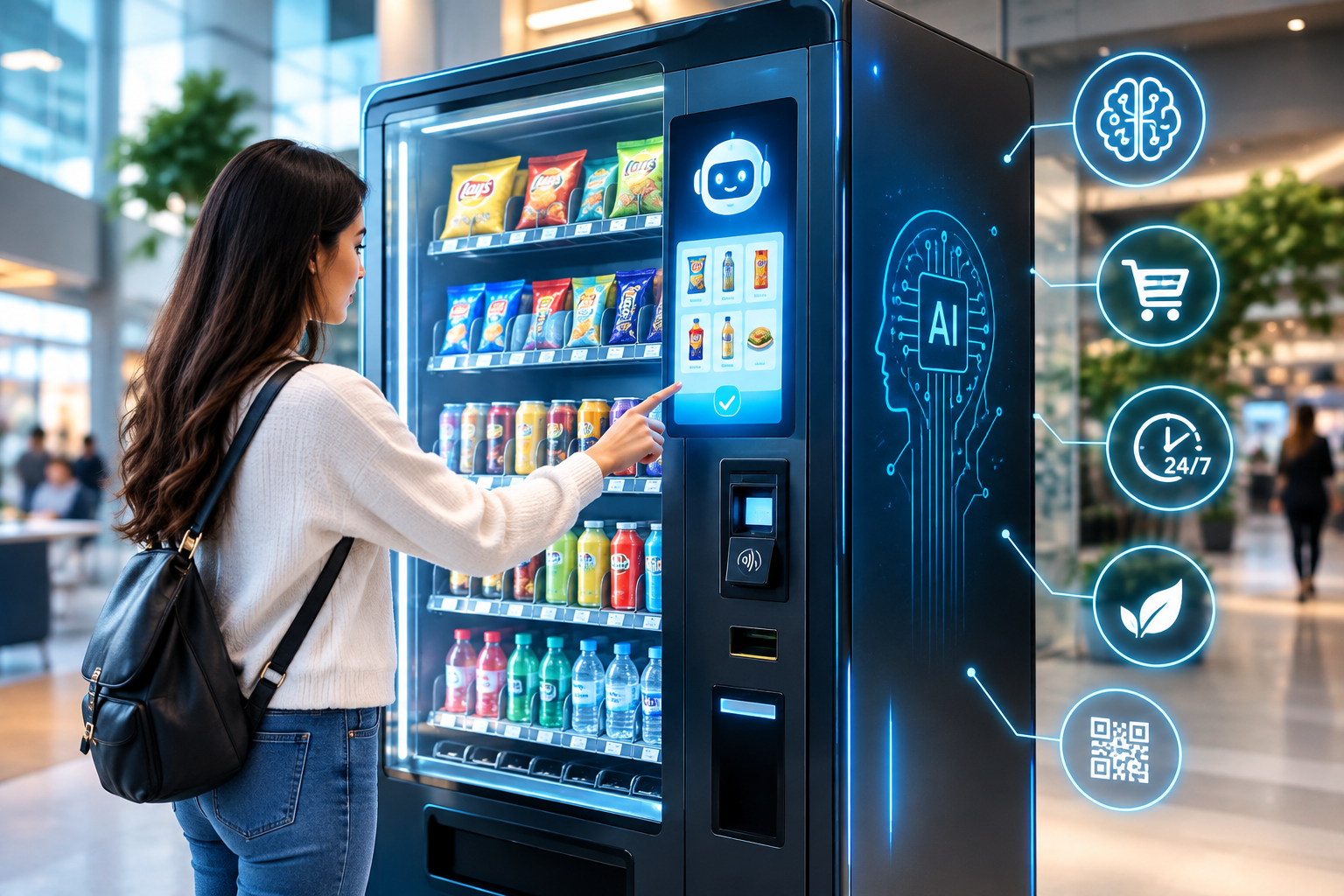
Walk up. Look at the screen. Get a personalized suggestion before you even press a button.
That’s a modern AI vending machine. It’s a big leap from the coin-slot boxes most people grew up with. The global intelligent vending machine market now sits between roughly $13 billion and $25 billion, depending on how it’s measured. Most forecasts point toward well over $50 billion within the next decade.
What Is an AI Vending Machine?
An AI vending machine is a traditional vending machine upgraded with cameras, sensors, and software. It doesn’t just dispense a product. It tracks inventory, accepts multiple payment types, and often makes real-time suggestions.
Some machines use computer vision to recognize what a shopper picks up. Others use AI to predict which products will sell best at a specific location. A few even adjust pricing automatically based on demand.
The core shift is simple. Older machines were passive boxes. These machines actively manage themselves.
How AI Vending Machines Actually Work
Computer Vision and Smart Sensors
Cameras and weight sensors track what’s taken from the machine in real time. This removes the need for a cashier, a barcode scan, or even a locked compartment in some designs.
Cashless and Contactless Payment
Cashless payment now dominates this category. It’s projected to hold roughly 63% of all transactions in 2026. Tap-to-pay, mobile wallets, and QR codes have mostly replaced coins and bills.
Predictive Inventory Management
AI systems track sales patterns and restock predictions automatically. Operators get alerts before a machine actually runs empty, not after.
Personalized Recommendations
Some machines use facial detection or purchase history to suggest products. A few adjust their on-screen ads based on the time of day or the weather outside.
AI Vending Machines by the Numbers
| Metric | Figure |
| Global intelligent vending machine market (2026) | $13.4–$19.8 billion, by source |
| Projected market size by mid-2030s | $53–$59 billion |
| Market CAGR (2026–2036) | 8.5%–18.8%, by source |
| Cashless payment share of transactions (2026) | ~63% |
| Region with largest market share | Asia-Pacific (~45%) |
| Typical payback period for a new machine | 6–18 months |
| Revenue lift vs. traditional machines | 6%–15% |
| Typical gross margin (right product mix) | 55%–65% |
| Free-standing machine market share (2026) | ~66% |
Vending machine market figures vary a lot across research firms. Scope and definitions differ. Treat any single number here as an estimate, not a fixed fact.
Why Businesses Are Switching to AI Vending
A few clear reasons keep showing up across operator surveys.
- Less manual oversight: Predictive restocking means fewer wasted trips to check inventory that’s already full.
- Higher sales per machine: Personalized suggestions and better product mix can lift revenue by double digits compared to a standard machine.
- Real, usable data: Operators can see exactly what sells, when, and where, instead of guessing from memory.
- Faster payback: Many placements recover their equipment cost within a year, sometimes faster in high-traffic spots like busy office buildings.
The Hidden Costs Worth Knowing
Not every number in this category tells the full story. A few costs get left out of glossy sales pitches.
- Processing fees add up: Cashless payments are convenient, but card and mobile processing fees cut into margin on every single transaction.
- Connectivity isn’t free: Machines that report data in real time need an ongoing data connection, which usually means a recurring monthly fee.
- Maintenance still matters: Cameras, sensors, and screens can fail. Smart hardware doesn’t mean zero-maintenance hardware.
A realistic ROI estimate accounts for all of this, not just the sticker price and the sales pitch.
Where AI Vending Machines Show Up Most
Busy office buildings are a common, strong-performing location, often paying back equipment costs within 6 to 9 months. Hospitals, gyms, and university campuses also show up frequently, thanks to consistent daily foot traffic. Airports and transit stations increasingly use them too, especially for cashless, high-speed transactions.
China and India currently show the fastest regional growth in this category, each posting double-digit annual growth rates.
Final Thoughts
AI vending machines have moved well past a gimmick. They track inventory, accept nearly any payment method, and increasingly personalize what they show each shopper.
The market numbers back up the shift, even accounting for how much they vary by source. Strong growth. Real payback periods. Genuine revenue lifts for operators who get the product mix right.
The technology isn’t flawless, and the fees add up. But the direction is clear: passive vending boxes are giving way to machines that actively manage themselves.
